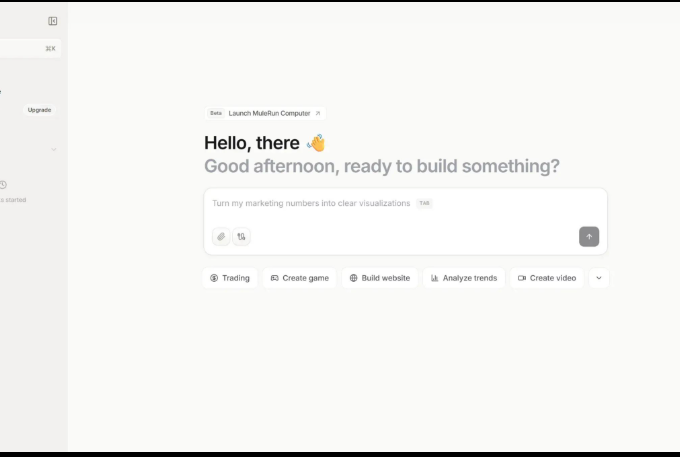


By 2026, AI agents for everyday life will empower normal users to significantly offload repetitive and time-consuming tasks. Think beyond simple voice commands; these autonomous AI agents will proactively manage your digital life, handle multi-step requests like coordinating family schedules across different calendars (Google Calendar, Outlook), drafting context-aware emails, and even booking flights and hotels according to your preferences and budget. They’ll act as a true personal AI assistant, learning your habits and anticipating needs, freeing up valuable time for more meaningful activities, from Buenos Aires to Berlin.
When you hear about “AI agents,” it’s easy to picture something out of science fiction. Robots running errands, or complex systems only accessible to tech wizards. But the reality by 2026 is far more grounded and, frankly, much more useful for the average person. We’re talking about AI agents for everyday life—software tools that take on routine tasks you’d normally have to do yourself, learning your preferences and acting autonomously within defined boundaries.
Imagine your personal AI assistant not just setting an alarm, but actually looking at your calendar, seeing a flight to Madrid at 6 AM, checking traffic conditions, and suggesting you leave an hour earlier than planned, then pre-ordering your usual coffee from the airport lounge. This isn’t a distant dream; the foundational technology for such intelligent delegation is already here, and it’s maturing rapidly.
So, what can these evolving AI agents actually do for normal users in North America, Europe, and South America? Let’s break down the practical applications that are already taking shape or will be common within the next couple of years.

Beyond Smart Speakers: The Rise of Autonomous AI Agents
For years, we’ve had smart speakers like Amazon Echo and Google Home, performing simple commands. They’re good at playing music or telling you the weather. But an autonomous AI agent is a different beast. It’s designed to understand context, make decisions, and execute multi-step processes without explicit prompting for each step. This is where personal AI assistant technology truly shines.
Streamlining Communication and Information Management
One of the most immediate benefits of AI agents for everyday life is how they’ll transform how we handle our inboxes and information. Think of the endless emails, the constant notifications, and the need to synthesize information from various sources.
A Personal AI Workflow for Repetitive Tasks: The Smarter Setup
- Email Triage and Drafting: Your AI agent can learn to prioritize emails, flag urgent messages, and even draft responses based on your communication style and past interactions. For instance, if you regularly reply to project updates from colleagues in Paris, your agent could draft a quick acknowledgment and a status update, awaiting your final approval. Services leveraging models like Claude or Gemini will integrate deeply with platforms like Gmail and Outlook.
- Meeting Summaries and Action Items: Post-meeting, an AI agent could automatically generate a concise summary of discussions, list action items, and even assign them to relevant attendees, pulling information from transcripts and shared documents. This is a significant boost to AI productivity for professionals everywhere, from São Paulo to London.
- Information Synthesis: Need to quickly understand the latest developments in, say, renewable energy policy across the EU? Your agent could scour news sources, academic papers, and official reports, and then present a synthesized digest tailored to your interests.
Mastering Your Calendar and Scheduling
Managing a complex schedule is a universal challenge. AI agents promise to turn calendar chaos into calm, acting as a tireless digital executive assistant.
- Proactive Scheduling: Instead of you trying to find a meeting time, your agent could coordinate with others’ agents (or just their calendars) to find the optimal slot, factoring in time zones (crucial for teams spanning New York, Santiago, and Berlin), travel time, and your personal preferences for breaks. Tools like Calendly already offer some automation, but AI agents will take this to the next level.
- Reminders and Preparations: Beyond simple reminders, your AI agent could pull up relevant documents for an upcoming meeting, suggest discussion points, or even pre-book a quiet room for a focused task based on your calendar entries.
- Family Coordination: Imagine an AI agent syncing multiple family members’ Google Calendars or Apple Calendars, finding slots for family dinners, doctor appointments, and school events, and even suggesting carpooling options for school pickups in a busy suburban area in the US.

Travel Planning Made Effortless with AI Agents
Planning a trip, whether for business or pleasure, often involves juggling multiple websites, comparing prices, and managing bookings. AI agents are set to revolutionize travel planning.
- Personalized Itinerary Creation: Give your AI agent a destination (e.g., “a week in Rome”) and a budget, and it could research flights, hotels, local attractions, and restaurants. It would then generate a detailed itinerary, complete with booking links and even backup options, learning from your past travel preferences and reviews from sites like TripAdvisor.
- Dynamic Booking and Rebooking: If a flight gets cancelled or delayed, your agent could proactively find alternative routes, rebook hotels, and even manage compensation claims. This would be a massive relief for anyone who has experienced travel disruptions, whether flying between continents or within South America.
- Visa and Regulatory Assistance: For international travel, especially between regions like Europe and North America, navigating visa requirements and local regulations can be tricky. Your AI agent could provide up-to-date information and even help with application processes.
Managing Household and Personal Logistics
AI agents for everyday life extend beyond the digital realm, impacting how we manage our homes and personal errands.
- Smart Home Integration: Your personal AI assistant could integrate with smart home devices to manage energy usage, adjust lighting based on your schedule, or even monitor security systems. Think about an agent learning you prefer cooler temperatures in your apartment in Toronto, or warmer settings in your home in Seville.
- Subscription Management: Ever forget about a recurring subscription you no longer use? An AI agent could track your subscriptions, alert you to upcoming renewals, and even cancel services on your behalf, potentially saving you money.
- Personal Finance Monitoring: While not a full financial advisor, an agent could monitor spending patterns, categorize transactions, and flag unusual activity, helping you stick to a budget or identify potential fraud. Many banking apps offer basic versions of this, but an AI agent would provide deeper, more proactive insights.
The Practicalities: Getting Started with AI Agents in 2026
So, how do you actually access these AI agents? In 2026, you won’t necessarily be “downloading an agent.” Instead, you’ll see major platforms integrate agentic capabilities. ChatGPT agents, for example, are already showing early forms of this, where an AI can chain together multiple steps to achieve a goal. Google’s Gemini and Anthropic’s Claude will likely offer similar, deeply integrated functionalities within their ecosystems.
For most readers, these capabilities will appear as enhanced features within the apps you already use: your email client, your calendar, your travel apps, and even your operating system. The key will be setting clear permissions and preferences, as these agents will require access to your data to be effective. Regulators in the EU, for example, are very focused on data privacy, so expect strong safeguards and transparency.
FAQs About AI Agents for Everyday Life
What exactly is an AI agent?
An AI agent is a software program designed to perform tasks autonomously, often interacting with other systems or data sources. Unlike simple programs, it can understand context, make decisions, and execute multi-step processes to achieve a defined goal, acting like a personalized assistant.
AI Search vs Google Search: How Results Are Changing and What It Means for You
How is an AI agent different from a smart assistant like Siri or Alexa?
While Siri or Alexa respond to direct commands, an AI agent takes initiative. It can anticipate needs, perform complex multi-step tasks without constant prompting, and learn from your behavior over time to act more effectively and autonomously.
Are AI agents safe to use with my personal data?
Reputable AI agents from companies like Google, Microsoft, and OpenAI will adhere to strict data privacy and security protocols. Users will typically have granular control over what data agents can access and how it’s used, with regulations like GDPR in Europe setting high standards for data protection.
Will AI agents replace human jobs?
AI agents are designed to automate repetitive, time-consuming tasks, freeing up human workers to focus on more creative, strategic, and interpersonal work. While some task-oriented roles might evolve, the primary goal is often to augment human capabilities and boost overall AI productivity, not to replace entire professions.
What’s a common misconception about AI agents?
A common misconception is that AI agents are all-knowing or can perform any task without supervision. In reality, they operate within defined parameters, learn incrementally, and often still require human oversight and refinement to perform optimally and safely.
The Future is Now: Practical AI for Everyone
The vision of AI agents for everyday life is not about replacing human decision-making, but about intelligently augmenting our capabilities. By 2026, these autonomous AI agents will be increasingly integrated into our digital tools, offering a tangible boost to personal AI productivity and making daily life smoother, whether you’re managing a busy household in London or a demanding professional career in Santiago. The future of AI is practical, personal, and profoundly helpful.
For more clear AI explainers and insights into how technology is shaping our world, be sure to follow Le Daily Post.