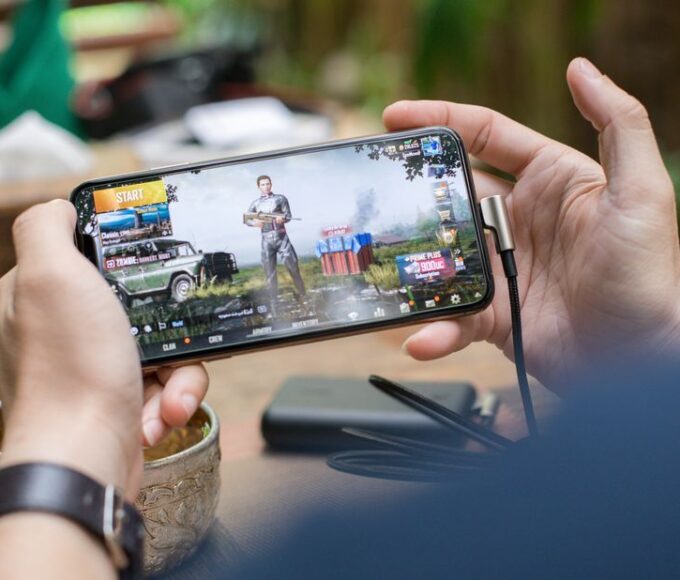


Yes, cloud gaming in 2026 is generally good enough for casual players, especially for those who prioritize accessibility and cost savings over competitive, pixel-perfect performance. Advances in streaming technology, wider availability of high-speed internet like 5G and fiber, and more robust server infrastructures from providers like Xbox Cloud Gaming and GeForce Now have drastically reduced latency and improved visual quality. For families looking to play without investing in expensive hardware, or individuals wanting to try a variety of games without large downloads, the experience is now often smooth and enjoyable enough to be considered a viable alternative.
Remember that feeling of wanting to play a new game, only to be hit with a massive download, or worse, realizing your old console just can’t handle it? For years, cloud gaming promised a way out of that cycle: play anything, anywhere, without powerful hardware. But the reality often fell short for most people. Lag, blurry visuals, and limited game selections were common frustrations.
Fast forward to 2026. The tech has matured, internet speeds have surged, and services like Xbox Cloud Gaming and GeForce Now have become household names. For the average casual player – someone who enjoys a few hours of gaming a week, maybe with friends or family, without needing to be an esports champion – the question isn’t just ‘can I play?’, but ‘is it finally *good enough*?’ We’re here to cut through the marketing and tell you the practical truth about cloud gaming in 2026 for the everyday gamer across Europe, North America, and South America.
The short answer, for most casual players, is a resounding ‘yes’ – with some important caveats we’ll get into. If you have decent internet, you’re in for a treat that could change how you think about gaming.
What Makes Cloud Gaming Tick (or Lag) in 2026?
At its heart, cloud gaming is about streaming. A powerful computer in a data center somewhere far away runs your game, and it streams the video output to your device, much like Netflix or YouTube. Your button presses travel back to that computer, and it reacts. The magic, or misery, happens in how fast this all occurs. In 2026, the technology has reached a point where, for many, the ‘lag’ is no longer a dealbreaker.
The Internet Connection: Still King, but More Accessible
The single most crucial factor for a good cloud gaming experience remains your internet connection. We’re talking about both speed and stability. In 2026, many regions, particularly in North America (think major cities in the US and Canada) and Western Europe (Germany, France, UK, Spain), boast widespread fiber optic internet. Services like Deutsche Telekom’s fiber in Germany or Verizon Fios in the US provide ample bandwidth for smooth 1080p or even 4K cloud streaming.
For casual players, a stable 25-50 Mbps connection is often enough for a decent 1080p stream. If you’re sharing your connection with others streaming movies or making video calls, aiming for 75-100 Mbps gives you a comfortable buffer. In countries like Brazil or Mexico, urban areas are seeing significant fiber expansion, but rural regions might still struggle with older DSL or satellite connections that just won’t cut it for cloud gaming 2026.
5G mobile networks are also a practical advantage. In many European capitals, or cities like São Paulo or New York, 5G can now offer speeds and latency comparable to home fiber, making truly portable cloud gaming a reality. Imagine playing Forza Horizon 5 on your tablet while waiting for a flight at Charles de Gaulle Airport, or a quick session of Minecraft on your phone during a bus ride in Buenos Aires.
Latency: The Invisible Killer (Now Mostly Managed)
Latency is the delay between your input (pressing a button) and the game’s reaction on your screen. High latency makes games feel sluggish and unresponsive. In early cloud gaming, this was a huge problem. By 2026, providers have invested heavily in:
- Closer Data Centers: More regional server hubs mean your signal travels shorter distances. For example, Xbox Cloud Gaming has servers strategically placed across the globe, including various European countries and regions within the Americas, minimizing the physical distance.
- Optimized Streaming Codecs: Better compression and decompression algorithms mean the video data gets sent faster and more efficiently.
- Adaptive Bitrate: The system intelligently adjusts stream quality based on your connection, preventing major hiccups if your bandwidth temporarily dips.
For casual games – puzzle games, turn-based RPGs, slower adventure titles, or co-op experiences like It Takes Two – current latency levels are largely imperceptible. Even many action-adventure games like Assassin’s Creed Valhalla or Halo Infinite on Xbox Cloud Gaming play well. Competitive shooters or fighting games, where milliseconds matter, still benefit from local hardware, but even there, the gap has narrowed significantly for the non-pro player.
Hardware & Software: The “No Console Needed” Dream
This is where cloud gaming truly shines for the casual player. You don’t need a €500 Xbox Series X or a $600 PlayStation 5. Your existing smart TV, smartphone, tablet, or even an older laptop is often all you need. Most services simply require a compatible controller, which could be an Xbox controller, a PlayStation DualShock, or a generic Bluetooth gamepad.
The Best Multiplayer Games for Long-Distance Friends and Families
Imagine a family in Bogotá wanting to play Roblox together, but only having one aging PC. With cloud gaming, several family members could play simultaneously on different devices without needing powerful local hardware for each. This accessibility dramatically lowers the barrier to entry, making gaming more inclusive.
Major Cloud Gaming Services in 2026 for Casual Players
Several big players dominate the cloud gaming 2026 landscape, each with its own strengths and weaknesses.
Xbox Cloud Gaming (Part of Game Pass Ultimate)
Microsoft’s offering is arguably the most compelling for casual players, primarily due to its integration with Xbox Game Pass Ultimate. For a single monthly subscription (around $17/€15/£13), you get access to a massive library of over 400 games, including first-party Xbox titles on day one. You can stream these games to almost any device with a browser, or via the Xbox app on mobile.
Pros for Casual Players: Huge, rotating library (including family-friendly titles like Minecraft and Forza Horizon), ease of use, seamless integration with Xbox ecosystem (saves carry over if you later buy a console), widespread server presence.
Cons: Max 1080p resolution (fine for most casuals but not 4K), queue times can sometimes occur during peak hours, especially in popular regions. In some parts of South America, server latency can still be a minor issue depending on distance to Azure data centers.
NVIDIA GeForce Now
GeForce Now takes a different approach. Instead of offering a game library, it streams games you already own on platforms like Steam, Epic Games Store, and GOG. It essentially gives you access to a high-end virtual gaming PC in the cloud. They offer a free tier (with limited session times and potential queues) and paid tiers (Priority and Ultimate) with longer sessions, better graphics cards, and higher resolutions (up to 4K).
Pros for Casual Players: If you’ve already accumulated a library of PC games, this is a fantastic way to play them without a gaming PC. Excellent performance on paid tiers, often offering higher fidelity than Xbox Cloud Gaming. Great for playing PC classics like Cyberpunk 2077 or Baldur’s Gate 3 on a basic laptop.
Cons: No games included with the subscription; you must own them separately. Not every game on Steam is supported, though the library is extensive. The free tier can be frustrating due to queues and short play sessions.
PlayStation Plus Premium (Cloud Streaming)
Sony’s cloud offering is part of its top-tier PlayStation Plus Premium subscription. It primarily allows you to stream a selection of PS4, PS3, and some PS2 games, alongside certain PS5 trial versions, to your PS4, PS5, or PC. It’s less device-agnostic than Xbox or GeForce Now.
Pros for Casual Players: Access to a back catalog of PlayStation classics, good for those already invested in the PlayStation ecosystem. Decent for catching up on older titles like The Last of Us Remastered or some PS3 era games.
Bridging the Distance: A Realistic Look at Board Game Apps for Remote Friends
Cons: Limited to older generation games for streaming (PS5 games must be downloaded and played locally unless it’s a trial), higher latency on older PS3 games can be noticeable, less flexible device support compared to competitors.
Other Notables
While Stadia is gone, Amazon Luna continues to operate, focusing on channel-based subscriptions for different game genres. It’s available in the US, Canada, Germany, and the UK, and offers a good experience for casual players looking for specific curated libraries.
Is Cloud Gaming Worth It for Casual Players in 2026?
Absolutely, for a huge segment of casual players, cloud gaming is worth it in 2026. If your internet connection meets the requirements, the benefits are clear:
- No Expensive Hardware: Save hundreds, even thousands, on consoles or gaming PCs.
- Instant Access: No downloads, no updates. Just pick a game and play.
- Broad Game Libraries: Services like Xbox Game Pass Ultimate offer a Netflix-like approach to games, encouraging exploration.
- Play Anywhere: On your TV, tablet, phone, or laptop – gaming fits into your life, not the other way around. This is especially useful for families where screens might be shared, allowing one person to stream on a tablet while another uses the main TV.
- Environmentally Friendlier: Less hardware manufacturing and energy consumption in your home.
The occasional minor visual artifact or imperceptible lag spike will rarely detract from the enjoyment for someone who just wants to relax with a game after work, or for kids playing with friends. The convenience factor far outweighs these small compromises for the target audience.
Frequently Asked Questions about Cloud Gaming 2026
Is cloud gaming reliable enough for families in 2026?
Yes, cloud gaming is generally reliable enough for families in 2026, provided they have a stable home internet connection, preferably fiber or high-speed cable. Services like Xbox Cloud Gaming offer a vast library of family-friendly titles, accessible on multiple devices simultaneously without needing individual consoles, making it a cost-effective and convenient option for shared entertainment.
What internet speed is needed for cloud gaming in Europe?
In Europe, for a good cloud gaming experience in 2026, a minimum stable internet speed of 25-50 Mbps is recommended for 1080p streaming. For households with multiple users or for those seeking 4K streams (where available, e.g., on GeForce Now Ultimate), 75-100 Mbps or higher is advisable. Fiber optic connections common in many European countries are ideal.
Can I play competitive games with cloud gaming in North America?
While you can technically play competitive games with cloud gaming in North America, it’s generally not recommended for serious competitive players where every millisecond counts. However, for casual competitive play (e.g., playing Fortnite with friends), the experience in 2026 is often acceptable, especially with a low-latency fiber internet connection and proximity to server data centers. For esports, local hardware still provides the definitive edge.
Do I need a special controller for cloud gaming?
No, you generally don’t need a special controller for cloud gaming. Most services like Xbox Cloud Gaming and GeForce Now support standard Bluetooth controllers, including Xbox Wireless Controllers, PlayStation DualShock 4/DualSense, and many third-party gamepads. Some services also offer touch controls for mobile, but a physical controller provides a much better experience for most games.
Is cloud gaming expensive in South America compared to consoles?
Cloud gaming can be significantly less expensive than buying a console in South America, where console prices (like the PlayStation 5 or Xbox Series X) can be inflated due to taxes and import costs. A monthly subscription to a service like Xbox Game Pass Ultimate or a GeForce Now tier, combined with using existing devices, offers a much lower upfront and ongoing cost than investing in dedicated hardware and individual game purchases.
What are the main drawbacks of cloud gaming in 2026?
The main drawbacks of cloud gaming in 2026 are still reliance on a strong, stable internet connection (unreliable connections lead to stuttering or lag), potential for minor input latency compared to local hardware (critical for competitive play), and occasional visual compression artifacts. Additionally, not every game is available on every cloud service, and in some regions, server availability might impact performance.
The Future is Here for Casual Gamers
The journey of cloud gaming has been a long one, but in 2026, it’s truly hitting its stride for the casual player. The technology has matured, internet infrastructure is catching up globally, and the convenience factor is undeniable. Whether you’re in Berlin, Buenos Aires, or Boston, if you have decent internet, you can dive into a world of games without breaking the bank on hardware. For families, busy individuals, or anyone who just wants to play without fuss, cloud gaming 2026 offers an incredibly compelling and genuinely ‘good enough’ experience. Ready to explore more ways to enhance your gaming life? Explore more gaming guides on Le Daily Post.