
Establishing effective remote work boundaries in a small apartment involves creating clear distinctions between your professional and personal life, even without physical walls. This means designating specific work zones, no matter how small, and implementing routines that signal the start and end of your workday. For residents in cities like New York, Madrid, or Lisbon, where space is often at a premium, success hinges on creative spatial organization, strict time management, and leveraging technology to maintain focus and disconnect properly. The goal is to prevent work from spilling into every corner of your home and mind.
Living and working in the same small space can be a test of willpower, organization, and sanity. For students and young professionals navigating the world of remote work, especially in bustling urban centers across Europe, North America, and South America, the challenge isn’t just about getting the job done, but doing it without letting your living room become your permanent office. The truth is, establishing remote work boundaries that work in small apartments isn’t just a good idea; it’s essential for long-term well-being and productivity.
Think about it: one moment you’re having breakfast at your kitchen table, and the next you’re taking a video call from the same spot. The lines blur, stress mounts, and suddenly, your cozy studio feels less like a sanctuary and more like a pressure cooker. But it doesn’t have to be this way. With some intentional strategies and a bit of discipline, you can carve out effective boundaries, even if your ‘office’ is just a corner of your bedroom.
The Myth of the Dedicated Office: Redefining Your Workspace
Many remote work guides assume you have a spare room, or at least a large enough living area to set up a proper desk. For those living in compact apartments in places like New York City, with its notoriously tiny living spaces, or the charming, albeit sometimes cramped, flats of Lisbon, that’s simply not reality. The key to remote work boundaries that work in small apartments is redefining what a ‘dedicated office’ truly means.
Creating Zones, Not Rooms
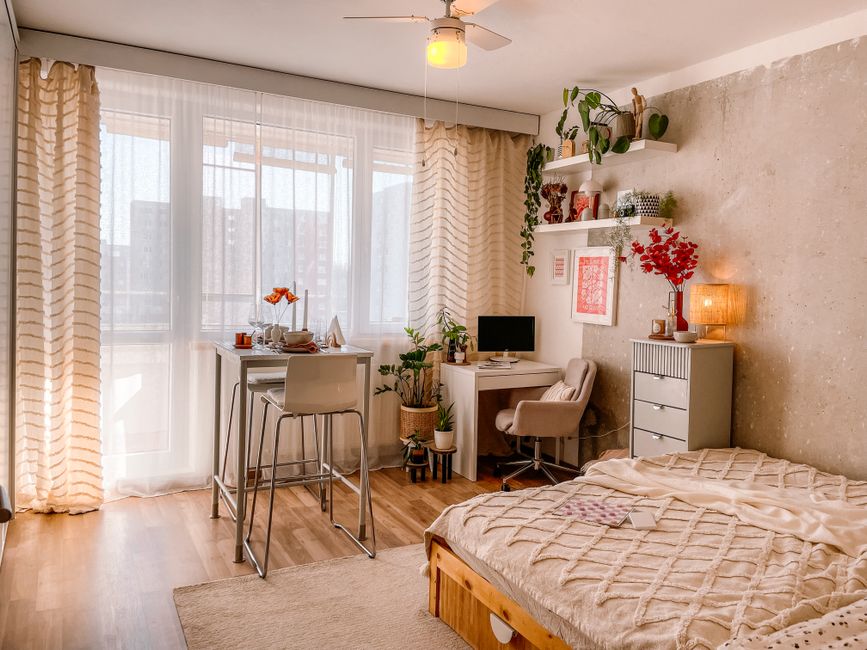
Instead of aiming for an entire room, aim for zones. This might be a specific corner, a small folding desk, or even just a particular side of your dining table. The trick is consistency. Your brain needs cues. If you only ever work at a specific spot, even if it’s small, it starts to associate that spot with work mode.
- The Alcove Office: Do you have an unused nook? A small desk like IKEA’s LINNMON / ADILS combo can fit almost anywhere. Add a small task light and a comfortable chair – even a good dining chair can suffice for short stints.
- The Closet Conversion: A ‘cloffice’ might sound extreme, but for very small spaces, a shallow closet can be transformed. Remove the doors, add a shelf as a desk, and suddenly you have a dedicated, albeit compact, workspace. When you’re done, you can even put a curtain back to ‘close’ your office.
- The Multi-purpose Surface: If your dining table is your only option, define a specific section of it as your work zone during work hours. Use a placemat, a small desk mat, or even just a laptop stand to visually delineate the space. Pack everything away when the workday ends.
Visual and Auditory Cues for Focus
Beyond physical zones, visual and auditory cues are powerful. Noise-canceling headphones, like those from Sony or Bose, can create an instant bubble of quiet, even if your partner is watching TV in the same room. For visual cues, consider a small plant, a specific coaster, or even just a specific mug that only comes out during work hours. These small rituals help your brain switch gears.
Time Blocking and the Power of the Commute Simulation
In a small apartment, the biggest boundary challenge often isn’t physical, but temporal. When your bed is just steps from your workspace, it’s easy for work to bleed into personal time and vice versa. This is where solid time management and ‘commute simulations’ become critical for setting remote work boundaries that work in small apartments.
Structured Workday, Clear End Time
Without a commute to signal the start and end of your day, you need to create your own. Schedule your workday like you would in an office. Use calendar apps (Google Calendar, Outlook) to block out not just meetings, but also focus time, breaks, and, critically, a hard stop time.
The Real Cost of Living Abroad: Europe vs. Canada vs. Latin America
- Morning Ritual: Instead of rolling out of bed and straight to your laptop, establish a pre-work ritual. This could be a 15-minute walk around your neighborhood in Madrid, a quick workout, or even just making a proper coffee and reading a physical newspaper. This ‘fake commute’ signals to your brain that the workday is beginning.
- Evening Decompression: Equally important is the end-of-day ritual. Physically pack away your work items, even if it’s just putting your laptop in a bag. Go for another walk, listen to a podcast, or call a friend. This helps you transition out of work mode and prevents the ‘always on’ feeling.
Micro-Breaks and Movement
In a small space, it’s easy to stay glued to your chair. Build in short, frequent breaks. Stand up, stretch, do a few squats, or even step outside for some fresh air, even if it’s just to your building’s communal balcony in a bustling Lisbon neighborhood. Apps like the Pomodoro Timer can help structure these breaks.
Digital Discipline: Muting Notifications and Defining Presence
Even with physical and temporal boundaries, digital distractions can erode remote work boundaries that work in small apartments. Your phone, your personal email, social media – they’re all vying for your attention, and in a small apartment, there’s no escape to a different floor or meeting room.
Strategic Notification Management
During work hours, mute personal notifications. Set your phone to ‘Do Not Disturb’ or ‘Work Mode.’ Use specific work communication tools (Slack, Microsoft Teams) and keep personal messaging apps closed. For many, the urge to check personal social media is strong; consider installing website blockers or using dedicated browser profiles (e.g., one for work, one for personal).
Defining ‘Availability’
Just because you’re home doesn’t mean you’re always available. Communicate your working hours clearly to colleagues and clients. Set your status on communication platforms to ‘Away’ or ‘Offline’ outside of those hours. Resist the urge to check emails or respond to messages late at night or early in the morning. This is especially vital when working across different time zones, for instance, if you’re in Europe collaborating with teams in North or South America.
Setting Expectations with Housemates and Family
Perhaps the most challenging aspect of remote work boundaries that work in small apartments is managing the expectations of others who share your space. Whether it’s a partner, family, or roommates, clear communication is paramount.
The Visual Signal System
Since you can’t close an office door, create a visual signal. This could be wearing headphones, placing a specific object on your desk (like a ‘do not disturb’ sign), or even a specific light color if you have smart bulbs. Train your housemates to understand that these signals mean you are focused and shouldn’t be interrupted unless it’s urgent.
Scheduled Check-ins and Quiet Hours
Set specific times for conversations or questions that aren’t urgent. For example, tell your partner, “I’ll be available for non-urgent chats during my lunch break and after 5 PM.” Institute ‘quiet hours’ where everyone in the apartment understands that noise levels need to be managed. This might mean your roommate saves their video game session for later or uses headphones, too.
The Role of Self-Care in Confined Spaces
All these boundaries are designed not just for productivity, but for your mental and physical health. Without them, burnout is a real risk, especially when your living space feels inescapable.
Small Apartment Living: Smart Storage and Design Ideas for Expensive Cities
Prioritizing Movement and Fresh Air
Make a conscious effort to leave your apartment regularly. Even a 20-minute walk through a park in Buenos Aires, a stroll along the waterfront in Lisbon, or navigating the vibrant streets of New York can make a huge difference. If you can’t get outside, try an indoor workout. Apps like Peloton or Apple Fitness+ offer guided exercises that require minimal space.
Designating a ‘No-Work Zone’
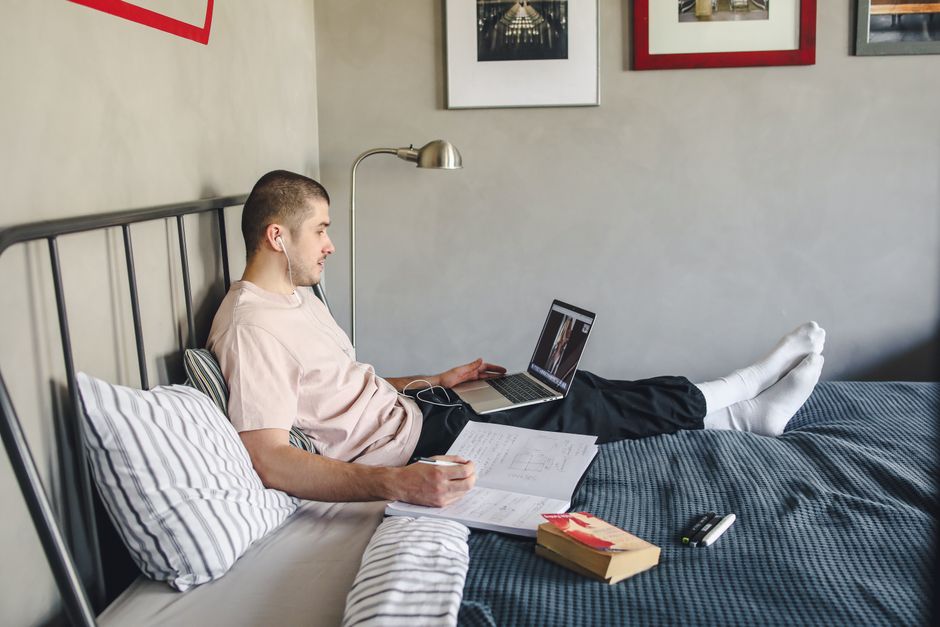
Even if your apartment is tiny, try to designate one area as a sacred ‘no-work zone.’ This might be your bed, a specific armchair, or even just your bathroom. The rule is simple: no laptops, no work-related thinking, no emails. This space is purely for relaxation and personal time, helping to reinforce those critical remote work boundaries that work in small apartments.
FAQ: Remote Work Boundaries in Small Apartments
How do I create a dedicated workspace in a studio apartment?
In a studio, designate a specific, consistent area for work. This could be a folding desk, a corner of your dining table, or a ‘cloffice.’ Use visual cues like a desk mat, specific lighting, or even a different chair to signal ‘work mode.’ Pack everything away at the end of the day to reclaim your living space.
What are effective ways to stop working when your bed is visible?
Establish a strong end-of-day ritual. Physically put away your work items, even if it’s just zipping up your laptop bag. Then, engage in a distinct activity like a short walk, a workout, or a hobby unrelated to work. This mental and physical transition helps detach you from your workspace.
How can I manage interruptions from housemates in a shared small space?
Communicate clear ‘focus hours’ and create visual signals, like wearing headphones or a specific ‘do not disturb’ sign. Schedule dedicated times for non-urgent questions and encourage housemates to respect your boundaries. Lead by example and respect their need for quiet, too.
What technology can help set boundaries in a small apartment?
Noise-canceling headphones are invaluable for creating auditory separation. Productivity apps like Pomodoro timers can structure work and break times. Consider website blockers for personal social media during work hours, and use separate user profiles on your computer for work and personal use.
Is it important to leave the apartment when working remotely in a small space?
Yes, absolutely. Regularly leaving your apartment, even for a short walk, is crucial for your mental and physical well-being. It provides a change of scenery, fresh air, and a psychological break from your workspace, preventing cabin fever and reinforcing the separation between work and home life.
How can I maintain a work-life balance when my home is my office?
Beyond physical boundaries, establish strict time boundaries. Set clear start and end times for your workday, and stick to them. Prioritize self-care, including exercise and hobbies, and designate at least one ‘no-work zone’ in your apartment. Intentional disconnection is key to preventing burnout.
Final Thoughts on Remote Work Boundaries in Small Apartments
Creating effective remote work boundaries that work in small apartments isn’t about having a grand office; it’s about intentionality and discipline. It’s about respecting your own time and space, even when they seem to overlap completely. By implementing these practical strategies—from defining zones to setting clear digital and temporal limits—you can improve your small living area into a productive workspace that doesn’t compromise your quality of life. Embrace the challenge, and you’ll find that even the most compact home can become a harmonious place for both work and rest.
For more practical lifestyle guides that help you navigate modern living, read more practical lifestyle guides on Le Daily Post.