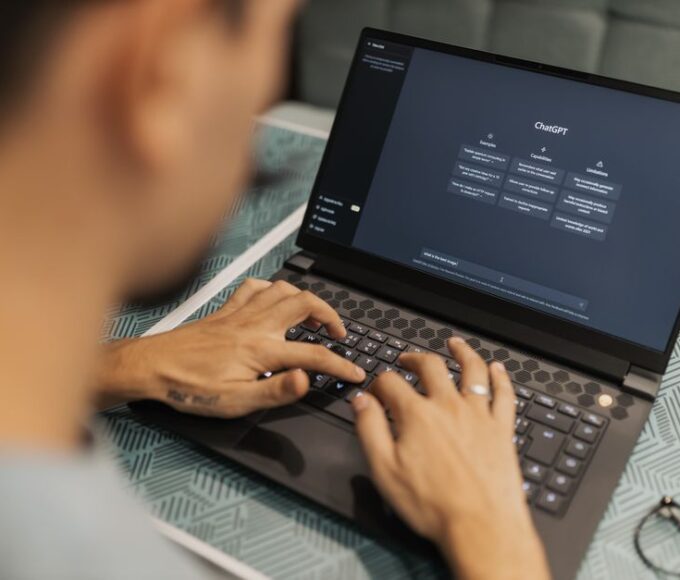


AI meeting notes offer significant benefits, including improved productivity by automating transcription, summarizing key decisions, and tracking action items, freeing participants to focus on the discussion. However, they also carry substantial risks, primarily around data privacy, security, and potential biases in summarization. To mitigate these, organizations must implement clear usage policies, ensure robust data encryption, understand the underlying AI models, and prioritize human review of outputs, fostering better habits for responsible AI adoption in the workplace.
You’ve just wrapped a critical client call, or perhaps a long internal strategy session. Everyone agreed on next steps, right? But then, an hour later, someone asks for a recap, or worse, there’s confusion about who’s doing what. This is where the promise of AI meeting notes comes in – tools designed to capture every word, identify action items, and summarize discussions, theoretically making our post-meeting lives much easier. But as with any powerful technology, particularly one involving artificial intelligence, the picture isn’t entirely black and white. There are real benefits, tangible risks, and a clear need for better habits if we want to truly leverage these tools without shooting ourselves in the foot.
Many workplaces, from startups in Silicon Valley to established firms in Europe and growing businesses in South America, are looking for ways to streamline operations. AI meeting notes seem like an obvious solution. They promise to free us from frantic scribbling and ensure no detail slips through the cracks. Yet, without understanding the nuances, particularly around data privacy and the limitations of the AI itself, we might be trading one set of problems for another.

Let’s unpack what’s actually happening when you press ‘record’ with an AI transcription tool, what the upsides truly are, where the dangers lurk, and how your team can adopt smarter practices to use AI meeting notes responsibly.
The Clear Benefits of AI Meeting Notes: Beyond Just Transcribing
At first glance, the main draw of AI meeting notes is simple: automation. No more designated note-taker, no more trying to listen intently while also typing furiously. But the advantages run deeper than just having a transcript. They touch on productivity, accessibility, and focus.
Boosting Productivity and Focus
One of the most immediate benefits is the ability for everyone to be fully present in the discussion. Instead of worrying about capturing every detail, participants can engage more deeply, ask better questions, and contribute more effectively. The AI handles the heavy lifting of documentation.
- Automated Transcriptions: Tools like Otter.ai, Fathom.ai, or even capabilities within platforms like Microsoft Teams and Zoom can generate accurate text transcripts of spoken words. This is invaluable for recalling specific phrasing or confirming details.
- Summarization: Many AI tools, often powered by large language models (LLMs) like those behind ChatGPT or Claude, can go a step further. They can condense lengthy discussions into concise summaries, highlighting key decisions, unresolved questions, and next steps. Imagine getting a 5-minute digest of an hour-long meeting.
- Action Item Extraction: Identifying who committed to what, and by when, is a critical outcome of any productive meeting. AI tools are getting better at parsing these commitments, assigning them to individuals, and even integrating with project management software.
Enhanced Accessibility and Knowledge Sharing
AI meeting notes also democratize access to information and foster a more inclusive workplace. For distributed teams, or those with members in different time zones, a comprehensive record is a lifeline.
The Practical Guide to AI Workflows for Solo Founders
- Catching Up: If someone misses a meeting, they don’t have to rely on a colleague’s potentially incomplete notes or a lengthy recording. A well-summarized AI note provides all the essential information quickly.
- Searchability: A text transcript is infinitely more searchable than an audio or video file. Need to find when a specific budget figure was mentioned or a particular client name? Just search the notes. This is a practical advantage for auditing past decisions or onboarding new team members who need historical context.
- Language Support: Some advanced AI tools can even offer real-time or post-meeting translation, a huge benefit for multinational teams or businesses dealing with clients across North America, Europe, and South America.
The Very Real Risks of AI Meeting Notes: What You Need to Know
While the benefits are compelling, ignoring the risks associated with AI meeting notes would be a serious oversight. These aren’t just theoretical concerns; they have practical, legal, and ethical implications.
Data Privacy and Security: The Elephant in the Room
This is arguably the biggest concern. When you use an AI transcription service, you are essentially sending sensitive audio (and often video) data to a third-party server. What happens to that data?
- Third-Party Access: Does the AI provider use your meeting data to train their models? Many free or low-cost services do, which means your company’s proprietary information, client details, and strategic discussions could inadvertently become part of a larger dataset, potentially accessible by others or baked into future AI responses. This is a major concern with general-purpose LLMs like ChatGPT and Claude if not used responsibly within enterprise-grade, privacy-focused setups.
- Compliance and Regulation: In regions like Europe, the General Data Protection Regulation (GDPR) sets strict rules on how personal data is collected, processed, and stored. Similarly, various industry-specific regulations (e.g., HIPAA in healthcare in North America) dictate data handling. Using an AI meeting notes tool without understanding its compliance posture could lead to significant legal and financial penalties. The upcoming EU AI Act also introduces new scrutiny for AI systems, pushing for transparency and risk assessment, which will undoubtedly impact how AI meeting note providers operate and how businesses in Europe can use them.
- Breaches and Vulnerabilities: No system is 100% secure. A data breach at your AI transcription provider could expose highly confidential information. The more data you entrust to third parties, the larger your attack surface.
Accuracy and Bias: The AI’s Limitations
AI isn’t perfect, and its outputs can reflect biases present in its training data or simply misinterpret human speech.
- Transcription Errors: AI speech-to-text is good, but not flawless. Accents, background noise, industry-specific jargon, or multiple speakers talking over each other can lead to inaccuracies. A wrong word in a legal discussion or a misquoted financial figure can have serious repercussions.
- Summarization Bias: The AI decides what’s important enough to include in a summary. This can introduce bias, either by design or by accident. If the AI is trained on data reflecting particular corporate cultures or viewpoints, it might inadvertently emphasize certain voices or topics over others, potentially marginalizing contributions from specific team members or downplaying critical but subtly-expressed points.
- Contextual Misunderstanding: AI models, while sophisticated, don’t possess human common sense or nuanced understanding of social dynamics. Sarcasm, irony, unstated assumptions, or body language – all crucial elements of human communication – are largely lost on current AI, leading to potentially sterile or misleading summaries.

Ethical Considerations and Consent
Recording conversations, even for internal purposes, touches on personal ethics and often requires explicit consent.
- The Expectation of Privacy: Most people have an expectation of privacy in meetings, even workplace ones. Covertly recording or transcribing without informing participants can erode trust and create an uncomfortable atmosphere. This is particularly true in many parts of Europe and South America, where privacy rights are often strongly protected by cultural norms and law.
- Legal Requirements for Consent: Many jurisdictions have ‘one-party’ or ‘two-party’ consent laws for recordings. For instance, in some U.S. states, only one person needs to know a conversation is being recorded (one-party consent), while in others, all parties must consent (two-party consent). Ignorance of these laws, particularly when dealing with international teams or clients, can lead to legal issues.
- Employee Monitoring Concerns: Using AI notes could be seen as a form of employee monitoring if not managed transparently, raising questions about workplace surveillance and trust.
Adopting Better Habits: Using AI Meeting Notes Responsibly
Given the benefits and risks, the key isn’t to avoid AI meeting notes entirely, but to use them intelligently and ethically. This requires a proactive approach and establishing clear guidelines.
1. Implement Clear Policies and Guidelines
Don’t leave it to individual discretion. Your organization needs a formal policy for using AI meeting notes.
- Mandatory Disclosure: Make it a rule that all participants must be informed at the start of any meeting that AI notes are being taken. For sensitive discussions, explicit consent should be obtained. Tools often have a visual indicator, but verbal notification is always best.
- Data Retention and Deletion: Define how long notes will be stored and when they should be deleted. Less data stored means less risk.
- Access Control: Who has access to the raw transcripts and summaries? Ensure access is limited to those who genuinely need it.
- Review Process: Establish a process for human review of AI-generated summaries and action items, especially for critical decisions, to catch errors or biases before they become problems.
2. Choose Your Tools Wisely
Not all AI meeting note tools are created equal. Do your due diligence.
How to Check Whether an AI Tool Is Worth Paying For Without Overcomplicating It
- Read the Fine Print: Understand the service provider’s privacy policy, terms of service, and data handling practices. Do they promise not to use your data for training? Is their data storage compliant with relevant regulations (e.g., GDPR for European operations)? Look for enterprise-grade solutions that prioritize privacy.
- Security Features: Check for encryption both in transit and at rest, multi-factor authentication, and compliance certifications (e.g., SOC 2, ISO 27001).
- Integration: Consider how the tool integrates with your existing tech stack (calendars, CRM, project management tools) to maximize efficiency and minimize data silos.
3. Educate Your Team
Knowledge is power. Ensure everyone understands the ‘why’ behind the policies.
- Training Sessions: Provide guidance on how to use approved AI tools effectively and ethically. This should cover best practices for informing participants, reviewing output, and understanding the limitations of the AI.
- Explain the Risks: Make sure team members understand the privacy and security implications, not just the convenience. This fosters a culture of responsibility.
- Context is Key: Remind users that AI outputs are aids, not definitive records. Critical decisions should always be verified and documented through traditional, human-reviewed means as well.
FAQ: AI Meeting Notes Risks Benefits Explained
What is the EU AI Act and how does it relate to AI meeting notes?
The EU AI Act is a landmark regulation aiming to create a common legal framework for AI in Europe, categorizing AI systems by risk level. While general AI meeting note tools might not be ‘high-risk,’ the Act’s emphasis on transparency, data governance, and fundamental rights will influence providers and users, requiring greater scrutiny of how personal data is handled and how potential biases in summarization are mitigated to ensure fair and accurate outcomes.
Can I use ChatGPT or Claude for AI meeting notes?
While models like ChatGPT and Claude can summarize text, using them directly for meeting notes with sensitive information carries significant risks. Unless you’re using an enterprise-grade, privately hosted version with strict data isolation, submitting meeting transcripts to public versions of these AIs means your data could be used to train their models, exposing confidential information. Dedicated AI meeting note tools often offer better privacy controls.
How accurate are AI meeting note transcriptions?
Modern AI transcription is highly accurate, often reaching 90-95% accuracy in ideal conditions with clear audio and standard English. However, this drops with background noise, multiple speakers, strong accents, or specialized jargon. Human review remains essential, especially for critical decisions or sensitive data, to ensure accuracy and prevent misunderstandings arising from misinterpretations.
What privacy features should I look for in an AI meeting notes tool?
Prioritize tools that explicitly state they do not use your data for model training. Look for end-to-end encryption, data residency options (e.g., data stored only within your region like Europe or North America), SOC 2 or ISO 27001 certifications, solid access controls, and clear data deletion policies. A transparent privacy policy that outlines how your audio and text data are handled is non-negotiable.
Is it legal to use AI meeting notes without consent?
The legality varies significantly by jurisdiction. In ‘two-party consent’ states or countries (e.g., some parts of the U.S., Canada, and many European nations), recording or transcribing a meeting without all participants’ explicit consent can be illegal. In ‘one-party consent’ areas, only one person needs to know. Always err on the side of caution: inform participants and ideally obtain explicit consent to maintain trust and legal compliance.
The Future of Workplace Productivity, Thoughtfully Applied
AI meeting notes represent a powerful shift in how we manage information and collaborate. The benefits—increased focus, improved accessibility, and automated summaries—are genuinely transformative. However, this power comes with responsibility. Navigating the AI meeting notes risks benefits landscape means understanding the privacy implications, the potential for bias, and the ethical considerations, particularly concerning consent and data security.
By adopting better habits—implementing clear policies, choosing solid tools with strong privacy features, and educating your team—your organization can harness the true potential of AI meeting notes. It’s about being strategic, not just adopting the latest tech. Make informed choices and your team will reap the rewards, from a bustling tech hub in São Paulo to a quiet office in Berlin. For more clear AI explainers and insights on navigating the evolving world of artificial intelligence, follow Le Daily Post.