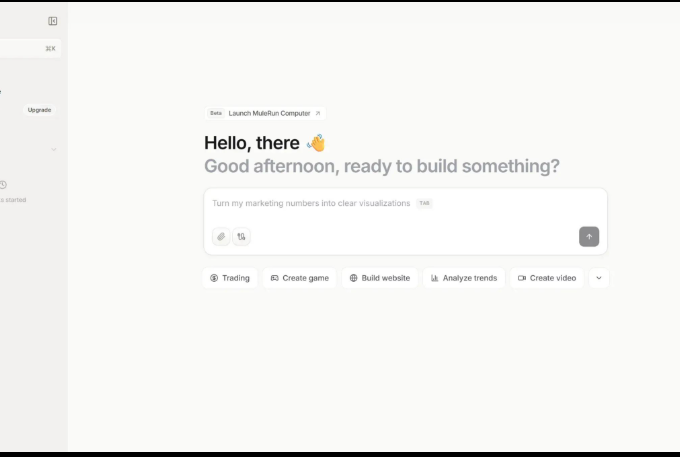


AI agents for daily work are software programs designed to perform specific tasks or workflows autonomously, often learning and adapting over time. They can handle repetitive chores like scheduling meetings, summarizing emails, drafting basic content, or managing data entry. However, their capabilities are still bounded: complex decision-making, nuanced human interaction, tasks requiring true creativity, or dealing with ambiguous real-world problems remain beyond their current grasp. They excel in well-defined environments with clear rules, acting as powerful assistants rather than independent operators for most users.
When we talk about ‘AI agents,’ it’s easy to picture something out of a sci-fi movie – a digital assistant that anticipates your every need, manages your entire day, and even offers profound insights. The reality, as an editor observing this space, is a little more grounded but no less fascinating. We’re seeing a rapid evolution in tools that can genuinely offload some of the mental and administrative burdens of daily work.
It’s not about replacing human ingenuity, but augmenting it. Imagine less time spent on the mundane, freeing you up for tasks that truly require your unique skills. That’s the promise, and to some extent, the current reality of AI agents for daily work.
Understanding the distinction between what’s hype and what’s genuinely useful is key. Many individuals and businesses, from small startups in North America to established firms across Europe and South America, are grappling with how to best integrate these tools without overspending or expecting miracles.
The Rise of Autonomous Helpers: Beyond Simple Chatbots
For a while, our primary interaction with AI was through chatbots, designed to answer specific questions or guide us through a limited set of options. Think of customer service bots or virtual assistants like Siri and Alexa. While useful, these were largely reactive tools. The newer wave of AI agents for daily work takes this a step further, aiming for a degree of proactive autonomy.
These agents can observe, plan, act, and reflect, often using large language models like those developed by OpenAI (e.g., powering ChatGPT) as their ‘brains.’ Instead of just answering a query, they might break down a complex request into smaller steps, execute those steps using other tools, and then present a final result. The goal is to move from ‘tell me what to do’ to ‘here’s a goal, go figure out how to achieve it.’ The EU AI Act, currently in its final stages, is a significant piece of legislation attempting to provide a solid framework for governing such advanced AI systems, particularly those deemed high-risk, which could impact how these agents are developed and deployed globally.

Practical Applications: What AI Agents for Daily Work Can Do Right Now
Let’s get specific about where these agents are making a tangible difference today. They’re not just futuristic concepts; many are available and improving rapidly.
AI Search vs Google Search: How Results Are Changing and What It Means for You
1. Email and Communication Management
- Smart Summaries: Agents can digest long email threads or meeting transcripts and provide concise summaries, highlighting key decisions and action items. This saves significant time, especially after a day of back-to-back virtual meetings.
- Drafting Responses: For routine inquiries or follow-ups, AI agents can generate initial email drafts. You still need to review and personalize them, but it cuts down on the blank-page problem.
- Scheduling and Reminders: Integrating with your calendar, an agent can find optimal meeting times, send invitations, and issue reminders, taking the back-and-forth out of coordination.
2. Data Analysis and Reporting
- Information Gathering: An agent can scour the web or internal databases for specific data points, compile them, and even identify trends. This is invaluable for market research or competitive analysis.
- Basic Report Generation: For standardized reports, an AI can populate templates with current data and generate initial drafts, freeing up analysts for deeper insights rather than data compilation.
3. Content Creation and Curation
- First Drafts of Text: From blog post outlines to social media captions or even internal memos, AI agents excel at generating initial text based on prompts and existing content. Think of it as a very skilled research assistant.
- Content Curation: For specific topics, an agent can monitor news sources, blogs, and social media, then compile relevant articles or updates into a digestible digest for you.
4. Task Automation and Workflow Management
- Routine Task Execution: Setting up an agent to perform recurring, rule-based tasks – like moving files, updating spreadsheets based on email triggers, or generating invoices – can significantly streamline operations.
- Project Tracking (Assisted): While not fully managing a project, an AI can monitor project management tools for due dates, flag overdue items, and prompt team members for updates.
5. Customer Support and Sales Assistance
- FAQ Handling: More sophisticated than simple chatbots, agents can handle a wider range of customer queries, escalating only those that require human intervention.
- Lead Qualification: In sales, an AI can process initial inquiries, qualify leads based on predefined criteria, and even schedule follow-up calls for sales representatives.
Current Limitations: What They Cannot Do Yet
Despite impressive advances, AI agents for daily work are far from perfect. Understanding their boundaries is crucial for realistic expectations and effective deployment.
| Capability | AI Agent Strength (Today) | Current Limitation (Today) |
|---|---|---|
| Decision-Making | Rule-based, data-driven decisions in defined contexts. | Complex, ethical, or ambiguous decisions requiring human judgment, intuition, or empathy. |
| Creativity | Generating variations, outlines, or initial drafts based on existing patterns. | True original thought, artistic vision, or breakthrough innovation. |
| Human Interaction | Answering FAQs, basic sentiment analysis, structured conversations. | Handling highly nuanced emotions, building deep rapport, empathetic listening, managing conflict. |
| Problem-Solving | Solving well-defined problems with clear parameters. | Tackling ill-defined, novel, or unstructured problems that require common sense reasoning or abstraction beyond its training data. |
| Contextual Understanding | Processing textual or numerical data within a limited domain. | Grasping subtle social cues, unspoken intentions, or the broader implications of actions in the real world. |

A common mistake is expecting an AI agent to perform like a human junior assistant without explicit instructions or oversight. They lack common sense reasoning. If a task isn’t clearly defined or if the environment is highly unpredictable, they will struggle or produce nonsensical results. For example, while an agent can draft an email to a client, it won’t spontaneously know to add a personalized anecdote about their last conversation unless explicitly instructed and provided with that data.
Common Mistakes When Integrating AI Agents into Your Workflow
Embracing AI agents can be transformative, but it’s easy to stumble. Avoiding these common pitfalls will save you time and frustration.
1. Expecting Full Autonomy Too Soon
Many users treat AI agents as fully sentient beings capable of independent thought. In practice, they are sophisticated tools that require clear, precise instructions and ongoing supervision. Start with simple tasks and gradually increase complexity as you understand the agent’s capabilities and limitations.
2. Neglecting Data Quality and Access
AI agents are only as good as the data they consume. If your internal data is messy, inconsistent, or inaccessible, the agent will produce poor results. Invest in data hygiene and ensure proper integrations so your AI can access the necessary information to perform its tasks effectively.
3. Skipping Human Review and Oversight
Even the most advanced AI agent will make mistakes or produce outputs that need refinement. Always integrate a human review step, especially for external communications, critical analyses, or creative content. This ensures accuracy, maintains brand voice, and prevents embarrassing errors.
4. Overcomplicating Initial Implementations
Don’t try to automate your entire workflow overnight. Begin by identifying one or two repetitive, high-volume tasks that are well-suited for automation. A phased approach allows you to learn, refine, and build confidence before scaling up.
Protect Your Job Skills in an AI-Heavy Workplace: A Realistic Checklist
5. Ignoring Ethical and Security Implications
When deploying AI agents, particularly those handling sensitive data, consider privacy, bias, and data security. Ensure compliance with regulations like GDPR in Europe or specific industry standards in North and South America. Always understand how your data is being used and stored by third-party AI tools.
Frequently Asked Questions About AI Agents for Daily Work
What is an AI agent, exactly?
An AI agent is an autonomous software program designed to perceive its environment, make decisions, and take actions to achieve specific goals. Unlike simple programs, they can often learn from interactions and adapt their behavior to improve performance over time, typically for well-defined tasks.
How do AI agents differ from regular AI tools like ChatGPT?
ChatGPT is a large language model (LLM) primarily focused on generating text based on prompts. An AI agent, while often using an LLM like OpenAI’s as its core intelligence, goes a step further: it can chain multiple actions, interact with other software, and often has a ‘memory’ or ‘state’ to complete multi-step tasks autonomously. It’s a tool that uses tools.
Can AI agents replace human jobs entirely?
For most complex roles, no. AI agents excel at automating repetitive, predictable tasks, augmenting human capabilities rather than replacing them. They free up humans for higher-level strategic thinking, creative problem-solving, and tasks requiring emotional intelligence, where they currently fall short.
Are AI agents expensive to implement for small businesses?
Not necessarily. Many AI agent functionalities are becoming integrated into existing productivity suites or offered as affordable SaaS solutions. Starting with task-specific tools for email management or content drafting can be very cost-effective, improving efficiency without massive upfront investment.
What are the biggest risks of using AI agents in daily work?
Key risks include data privacy breaches, algorithmic bias leading to unfair or incorrect outputs, over-reliance without human oversight, and the potential for ‘hallucinations’ or generation of false information. Careful implementation, continuous monitoring, and human review are essential to mitigate these risks.
The journey with AI agents for daily work is just beginning. By understanding their current capabilities and inherent limitations, you can strategically integrate them into your routine, enhancing productivity and freeing up valuable time. Stay informed about these evolving technologies and how they’re reshaping our professional lives.
For more clear explainers on the latest in artificial intelligence and its practical applications, be sure to follow Le Daily Post for clear AI explainers.